JUDGE NOT LEST YE BE JUDGED
By Dr. JAMES LIKOUDIS
It is really astonishing where some Catholics are today. They are found sanctioning every sin that is glorified in what Pope John-Paul II has termed our ‘culture of death’. Here we are, we Catholics, faced with the sinfulness of pornography, contraception, abortion, fornication, adultery, divorce, and sodomy – all moral evils ruining our society and devastating normal family life.
True, we hear much prattle about “renewal” and evangelization, but for the most part Catholics appear to be in disarray and in retreat before the powerful secular forces that shape our society and our lives. “Woe to me, if I do not preach the Gospel,” said the Apostle Paul, and in our own day we suffer from various woes. There are evils in society we Catholic laity are obliged to address; there are evils in the Church that must be corrected. A non-Catholic psychiatrist has attracted attention to the impact of dissenters in the Church:
“The Pope says same-sex is wrong, but a good many of his own priests in this country (some of them gay themselves) say the Pope is wrong. Indeed, in much of academe and in many secondary school classrooms, gays are said to lead a new vanguard, the wave of the future in a world that will be more demographically secure when it has fewer ‘breeders’ (which is what some gay activists call heterosexuals these days).”
(Dr. Charles W. Socarides in “America“, Nov. 18th, 1995)
When the moral sense of people has, in effect, been blunted or sapped by a Godless sex-saturated media and by rebels against Catholic doctrinal and moral teachings who, moreover, occupy important posts in dioceses, the result is moral intimidation leading to the silencing of all too many Catholics. There is silence with respect to the most outrageous sacrilege, blasphemy, and sexual perversion which no longer receive public censure. There is no longer moral outrage that is proper to offenses committed against God and God’s law. The sayings of our divine Lord are even twisted and perverted in the interests of such moral intimidation. Whether it is the sacrilege of Bill and Hillary Clinton receiving Communion in a Catholic parish or hundreds of active homosexuals receiving Communion in Rochester’s cathedral, Catholics are told “Do not judge,” for Christ has said, “Judge not lest ye be judged” (Matt. 7:1).
The fear of rendering any more judgment regarding a sinful act (clearly condemned by Christ’s saving Gospel) can be truly inhibiting and paralyzing. It really means, of course, an abandonment of the intellect God gave us. It means sin does not matter. Either it does not exist or exists only to be excused by that oozing love and compassion typifying a “feel-good” religiosity. The holy Scriptures, interestingly, never speak this way on moral issues which, after all, involve salvation or damnation.
Unlike some modernistic priests, St. Paul speaks in clear and unequivocal terms:
- “Can you not realize that the unholy will not inherit the Kingdom of God? Do not deceive yourselves: no fornicators, idolaters, or adulterers, no sodomites, thieves, misers, or drunkards, no slanderers or robbers will inherit God’s Kingdom” (1 Cor. 6:9-10).
- Moreover, the same Christ who said, “Judge not, lest ye be judged”,
- is the same Christ who also said: “Do not judge by appearances, but judge with right judgment” (John 7:24).
- Our divine Lord did not fear to judge unrepentant scribes and pharisees as “hypocrites,” “sons of Hell,” “blind guides,” “blind fools…full of robbery and uncleanness,” “whitened sepulchers which outwardly appear to men beautiful, but within are full of dead men’s bones and of all uncleanness…full of iniquity,” “serpents, brood of vipers.” (Read our Lord’s invectives in Matthew, chapter 23.)
- St. Paul judged Elymas the magician “an impostor and a thoroughgoing fraud son of Satan and enemy of all that is right” (Acts 13:10-11),
- Ananias the high priest he judged a “whitewashed wall” (Acts 23:3).
- It was St. Paul who judged that “there are some who trouble you, and wish to pervert the Gospel of Christ” (Gal.1:7).
- It was St. Paul who told the early Church: “Judge everything, hang on to what is good” (1 Thess. 5:21).
Such plain language used by our Lord and His Apostles was justified by their accurate assessment of others’ principal vices and corrupt attitudes and behavior and their refusal to repent of their sins. They grieved over others’ sins and how they misled others to similarly break the Commandments of God. They did not lack sorrow and compassion toward sinners (they were even willing to die for them, as our Lord did on the cross), but they would not explain away the awfulness of sin or deny the connection between sin and punishment, in this world and in the next. The “hard sayings” of Christ concerning sin, judgment, Purgatory, Heaven, and Hell remain as true today as ever. The inane “I’m okay, you’re okay, God’s okay” philosophy dear to liberals is not that of the Gospel. It obliterates the essential difference between good and evil.
The judgment Christians are to refrain from is judgment concerning the eternal fate of anyone. Leave intentions, motives, and final worth to God. We are not to confuse the judgment of the actions of people with sitting in judgment over them as to their eternal fate. But reluctance to make judgments concerning sinful acts is to produce that type of paralysis and inactivity that has brought both contemporary society and American Catholics to their present plight.
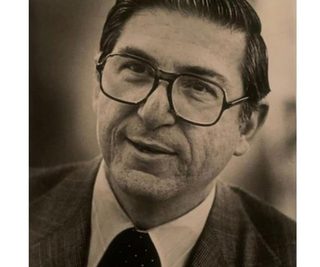
About Dr. James Likoudis
James Likoudis was an expert in Catholic apologetics. He is the author of several books dealing with Catholic-Eastern Orthodox relations, including “The Divine Primacy of the Bishop of Rome and Modern Eastern Orthodoxy: Letters to a Greek Orthodox on the Unity of the Church.” He has written many articles published by various religious papers and magazines.
This article is reprinted from the 1998 October-December issue of The Guardian, the newsletter of “Citizens for a Decent Community”.