The Gospel According to Joshua: Spirituality for an " American Church"?
By Dr. JAMES LIKOUDIS
Editorial Note: Since the following article was published, Joseph Girzone has written four other books starring his “JOSHUA” character who constitutes a blasphemous caricature of Jesus Christ.
An interesting article in the Rochester, New York diocesan paper attracts attention once again to Fr. Joseph Girzone’s best seller “JOSHUA” (Collier Books: Macmillan Publishing Co., 1987 and also distributed by Paulist Press). This strange book has already sold over 250,000 copies and brought the Albany priest-author nation-wide attention as a speaker and retreat director. At this writing, Fr. Joseph Girzone is busily promoting his “new spirituality” in the Diocese of Orlando, Florida, having been heralded as the author of “one of the leading spiritual writings of the last decade” (See “The Florida Catholic”, 12/9/88). Not surprisingly, the “Western New York Catholic” (October 1988) regarded the book with favor.
In the book “Joshua“, Jesus is brought back to earth and placed in conflict with Church authorities who have clearly lost sight of Our Lord’s basic message concerning spiritual freedom and growth. As writer Strong relates:
“Fr. Girzone sees in the Church today some of the same rigidity and legalism that Jesus saw in His day. He acknowledged that in writing the book he was walking on ecclesial thin ice. ‘It’s very carefully worded…I was very much aware of how I was writing it’. In fact, he had a canon lawyer read it three times, ‘the first time as a reader, the second time as a theologian, the third time as a lawyer’. The canon lawyer found nothing objectionable in it, the priest said…(Fr. Girzone) also acknowledged he deliberately portrayed the Church authorities in Joshua as stereotypes in order to help him make his point (about providing a blueprint for restructuring the Church) and noted that many Church leaders – including the Diocese of Rochester’s Bishop Matthew H. Clark – are sincerely seeking ways to balance freedom with the proper use of authority.”
(writer Lee Strong in Rochester Courier-Journal 11-24-88)
Fr. Girzone clearly believes that his Jesus “makes sense. That’s the key… People can identify with the personality of Jesus in the book and the way religion should be.” and that his book “Joshua” deserved to be examined.
In this fictional story, Joshua (who is Christ appearing again on earth as a carpenter and wood-worker) endears Himself to simple and ordinary people who encounter Him. However, He inevitably comes into conflict with the authoritarian Scribes and Pharisees of today: that is, the spiritually obtuse and power-hungry advocates and defenders of organized religion and the institutional church (especially, the Catholic Church). Joshua, the disturbing Christ-figure, is portrayed as a hero of spirituality because he understands Religion in its true sense as a personal relationship with God and as a religion of the heart. True religion, Joshua teaches, is Jesus-related, not structures-related. The Catholic Church is corrupt in its failure to recognize Jesus in the Spirit, and is permeated with Bureaucracy, Worldliness, and Legalism. It does not understand the Spirit of Jesus, attempts to suppress the deepest religious sentiments of “the people”, and still seeks to legislate human behavior. It fails to recognize that true religion is bigger than any denomination. Joshua, fittingly enough, Himself frequents different churches and even worships in the local community synagogue.
According to Girzone’s Joshua:
- The Catholic Church is obviously out-of-date, and a far cry from what the Jesus of 2,000 years ago intended. It remains the victim of “man-made laws”; it is a barrier to the freedom of the children of God and exercises a “rigid authority” stifling human growth and development.
- “Jesus came to earth to free people from that kind of regimented religion where people are threatened if they don’t obey rules and rituals invented by the Church.” (page 73)
- “God is not honored by worship that is forced under threat of sin or penalty.” (page 75)
- “The Church has become a structure superimposed on the life of the people and the people are not really allowed to be part of it.” (page 88)
- “All churches have strayed far from Jesus’ original message.” (page 137)
- “All churches are declared to be a mixture of good and evil, and the Catholic Church is especially identified as the heir to the decadent religiosity of the ancient Pharisees. There is no true Church because “God has no favorites” (pages 102 and 126).
- Joshua proceeds to preach that the Catholic Church should do away with its forced discipline of celibacy and allow married priests in the Latin Rite.
- Its marriage laws are inhumane (pages 124-125);
- its rigid ritual of sacramental confession is inhumane (pages 124-125);
- its support of capital punishment is inhumane (page 178);
- its strictures against Intercommunion are inhumane;
- its prohibition of divorce and remarriage is inhumane. The Catholic church has no business interfering in the most intimate details of people’s lives.
- The Catholic priest, Fr. Pat, who appears in this short novel, admires Joshua and regards Him as “a rare, authentically religious man and one of the few persons who truly understand religion.” (page 140). His pastor and Bishop who regard Joshua as a threat to the Catholic establishment, are both portrayed unsympathetically.
- Eventually, Joshua goes to Rome, having been summoned there by the modern Inquisition, the Congregation for the Doctrine of Faith, and proceeds to lecture the Pope (whom he acknowledges as Peter) on the prophetic role of the Spirit “who leaves each apostle to be free to work with his own flock, and solve the unique problems of his own flock” (page 263).
- After the miracle-working Joshua mysteriously disappears, He is censured by the Congregation for being highly critical of Church bishops, Church practices, and Church policies, though He is absolved from “heresy”. An important Cardinal files a minority report indicating to the Pope a grave mistake had been made, and Joshua’s friends feel both grief and joy in their remembrance of His presence among them.
- All of “Joshua“, takes place in the context of an alleged renewed gospel of love and freedom of the Spirit that is foreign to the Pope and Bishops who prefer their Catholic People to be slaves. (See page 170). In Joshua’s eyes, the Church’s leaders “like to make rules and laws that burden people’s lives and decree that, if they are not obeyed, they sin and are liable to punishment by God. That is so unlike Jesus.” (page 170)
“Joshua” reads easily and has a certain fascination. It is, however, a profoundly anti-Catholic tract in so far as it perpetrates a gross misunderstanding of the nature of the visible Church, and, in fact, rejects the Church-as-Institution. The Church-as-Institution and the Church as the Mystical Body of Christ cannot be so separated. The Holy Spirit as the soul of the Catholic Church does not promise a “freedom” from the obligations of Catholic dogma and discipline. One can agree with various criticisms of the “human element in the Church” but there can be no warrant to incite rebellion against the hierarchical authority of the Church or to promote indifference to its teachings on faith and morals. In its antinomian (lawless) attitude toward institution, structure, authority, dogma and canonical practice in the life of the Church, the book could have been written by one of the most radical “free spirits” of the Protestant Reformation. Calling for a prophetic return to an illusory “true Christianity of the Spirit”, the book heralds the destruction of historic and traditional Catholicism (a religion it does not understand and mercilessly caricatures).
In short, “Joshua” is simply a rehash of the most stale Protestant and Modernist attacks on the Catholic Church, and the “Christ-figure” of Joshua is only a rather silly Americanized version of the Christ whom Liberals and Modernists fancy. Their “Christ” is foreign to the Christ of Catholicism, the real Christ of the New Testament Who did speak of dogma and sin and punishment, and did found an infallible Church to “teach all nations” the Way of Salvation.
It should be a matter of concern that many Catholics have found the Gospel according to Joshua spiritually appealing. The book’s popularity tells us much concerning the state of the Church in the United States with its “anti-Roman complex” (the phrase of the late Hans Urs von Balthasar) and its pandering to a spurious “new spirituality” foreign to the great Fathers and Doctors of the Church.
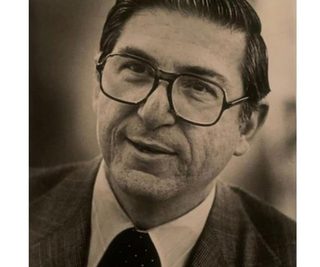
About Dr. James Likoudis
James Likoudis was an expert in Catholic apologetics. He is the author of several books dealing with Catholic-Eastern Orthodox relations, including “The Divine Primacy of the Bishop of Rome and Modern Eastern Orthodoxy: Letters to a Greek Orthodox on the Unity of the Church.” He has written many articles published by various religious papers and magazines.
Reprinted from SERVIAM Newsletter, issue of March-April 1989