The Heretical Hymns We Sing
By Dr. JAMES LIKOUDIS
There is an indisputable consensus among trained musicians, liturgists, and informed laity that the sacred liturgy in our parishes is conspicuous by its poor and impoverished celebration, and that the sacred music which ought to accompany Mass (the “heavenly liturgy”) is deplorably absent. Only those wedded to what Dr. Peter Kwasniewski of Wyoming Catholic College has termed “the invasion of profane secular music that has descended on most Western parishes today” will continue to blind themselves to the harm done the worship of God in our churches. Such profane music with guitars, piano, and drums establishing the dumbed-down spiritual tone of the parish is the legacy of post-conciliar disorders. They, wrote Kwasniewski, constitute:
“Nothing other than a conforming of our minds to our secularized age, to the artistic, psychological, and spiritual degeneracy of our times… stylistically at the level of sensuality or ‘everyday’ emotions… is not music fit for worship because it does not help the soul to mature in spiritual dignity, it does not purify the passions and elevate the mind to a more heavenly plane of existence,”
And,
“Indeed, it would seem that a casual, talkative style of celebrating Mass coupled with a popular musical idiom could almost guarantee, or at any rate allow, a stunted psychological growth, an artificially prolonged adolescence of the emotions, out of keeping with the increasing spiritual perfection the Lord intends to impart through the sacred rites and mystic sacraments of the Church”.
(see his masterful “Contemporary Music in Church?,” Homiletic and Pastoral Review, October 2006)
But there is more to be concerned about, namely, the popular songs sung as hymns which are frankly heretical or doctrinally ambiguous when touching upon essential doctrines of the Catholic faith. Papal biographer George Weigel has noted that hymns are not intended to be “liturgical filler.” They are “distinct forms of confessing the Church’s faith.” In one of his columns, he lamented how Catholics:
“settle for hymns musically indistinguishable from Les Mis and hymns of saccharine textual sentimentality. Moreover, some hymn texts in today’s ‘worship resources’ are, to put it bluntly, heretical.”
He singles out the hymns “Ashes” and “For the Healing of the Nations” as “teaching heresy” and says that they “have no business in the liturgy”. Ashes teaches Catholics, “We rise again from ashes to create ourselves anew.” “NO, we don’t,” Weigel responds: “Christ creates us anew (unless Augustine was wrong and Pelagius right).”
Particularly grievous are hymns/songs which fail to profess clearly the faith of the Catholic Church in the real substantial Presence of Christ in the Holy Eucharist. In parishes across the nation one finds priests, deacons, and congregations singing with gusto the opening verse of the stanzas of The Supper of the Lord that proclaims: “Precious body, precious blood, here in bread and wine.“ Is this Catholic teaching concerning the Eucharist? Any orthodox Lutheran could happily join in its singing as he would find it a perfect expression of Luther’s eucharistic doctrine of consubstantiation, which held that bread and wine coexist with the body and blood of Christ.
Certainly, there should be no hymn casting into doubt or ambiguity Catholic doctrine regarding “the substantial Presence whereby Christ, the God-man, is wholly and entirely present” in the Holy Eucharist by transubstantiation (cf. Paul VI’s encyclical letter, Mysterium Fidei). As Pope Paul VI insisted, only harm to the faith of the People of God can result from the inappropriate and defective use of language other than that approved in the doctrinal formulations of the Magisterium. To do so inevitably results in confusing the faithful, precipitates a loss of faith, and is, in effect, blasphemous toward Christ’s substantial Presence under the appearance of bread and wine — the substance of bread and wine having totally ceased to be present.
A letter to the editor in a Catholic paper some years ago only reflected what should be alarm over false teaching concerning the Eucharist that has spread in parishes:
“There are many unworthy receptions of the Eucharist taking place every weekend as if it’s no big deal. We have lost our respect for the Eucharist. Some people even refer to it as ‘taking bread and wine’ instead of ‘Body and Blood.’ We really need a wake-up call. 1373-1390 and 2120 of The Catechism of the Catholic Church leave no doubt concerning the sacred meaning of the Eucharist and that unworthy reception is sacrilegious. How long can God be expected to tolerate this outrageous insult?”
As to “The Supper of the Lord” found in the Today’s Missal, large-print edition, published by Oregon Catholic Press, with its profession of faith: “Precious body, precious blood, here in bread and wine,” whereas some priests and laity express befuddlement at its failure to express clearly and unequivocally that ordinary bread and wine no longer exist after the consecration in the Holy Sacrifice. There are priests, deacons, and lay people in the Diocese of Rochester, N.Y., who see nothing wrong with that hymn. They have no problem with it. It continues to be sung at the time of Communion during the greatest feasts of the year, and priests have been heard delivering homilies referring to the Presence of Christ “in the bread and wine.”
Here are examples of other questionable hymns found in the same music missal published by Oregon Catholic Press, which serve as popular ditties to be sung at Mass:
is not the only problematic hymn that could be sung by any Protestant:
Let Us Break Bread Together:
Let us break bread together on our knees…
Let us drink wine together on our knees…
Let us praise God together on our knees.
To Be Your Bread (David Haas):
To be your bread now, be your wine now, Lord,
come and change us to be a sign of your love.
Blest and broken, poured and flowing,
gift that you gave us, to be your body again…
Give us the bread and wine that brings us to life.
Feed us, and we’ll never hunger, never thirst again.
You Are Our Living Bread (Michael Joncas):
You are our living bread; you are our holy wine, Jesus Christ.
I feed my people on the finest of bread, on my body broken for them.
I feed my people on the finest of wine, on my blood of suffering and shame.
Where two or three have gathered in my name, there am I in the midst of them.
Bread Of Life (Rory Cooney):
I myself am the bread of life.
You and I are the bread of life,
taken and blessed, broken and shared by Christ that the world may live,
live, that the world might live. That the world might live.
This bread is spirit, gift of the Maker’s love,
and we who share it know that we can be one:
Here is God’s kingdom given to us as food.
This is our body, this is our blood.
Lives broken open, stories shared aloud, become a banquet,
A shelter for the world; A living sign of God in Christ.
Now As We Gather (Eugene Castillo):
Here we shall break the bread of our promise,
Here we shall share the sign of God’s grace;
Here we shall feed from God’s holy table,
Here we shall see our God face to face.
God be among us as we draw near,
Sharing the sign of love and of promise.
Wine of our sorrow, bread of our joy,
Lord, God, be among us now.
There are more such “hymns” that can be quoted that betray doctrinal confusion, but perhaps it suffices to repeat that great injury has been done the faithful by mischievous tampering with the Church’s traditional language concerning the Holy Eucharist. The actual plain meaning and intention of lyrics need to be intelligible and not subject to being doctrinally ambiguous or flagrantly heretical, especially in today’s unbelieving climate.
It may be recalled how the priest Arius and his followers in the early Church popularized hymns with problematic wording that undermined the divinity of Christ. Catholics have always believed that the Holy Eucharist was no longer “bread and wine.” Rather, the Lord Jesus Himself is rendered “truly present in the Eucharist as He is in Heaven… To believe this is especially meritorious” (St. Bonaventure).
“Hymns” that weaken the Church’s dogmatic teaching on the Holy Eucharist, to repeat the words of George Weigel, have “no business in the Church’s liturgy.”
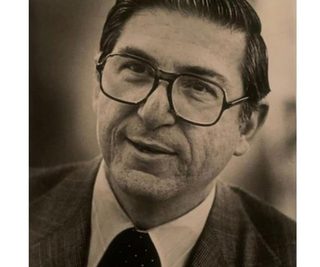
About Dr. James Likoudis
James Likoudis was an expert in Catholic apologetics. He is the author of several books dealing with Catholic-Eastern Orthodox relations, including “The Divine Primacy of the Bishop of Rome and Modern Eastern Orthodoxy: Letters to a Greek Orthodox on the Unity of the Church.” He has written many articles published by various religious papers and magazines.
This article first appeared in “The Wanderer”, the oldest Catholic weekly newspaper, on May 3, 2012.