THE LATIN LITURGY : QUO VADIS?
By Dr. JAMES LIKOUDIS
Convention, June 26-27, 2004 Indianapolis, IN –
It is a great honor to have been asked to speak at this LLA Convention. I have long admired the work of the Latin Liturgy Association and have treasured its Newsletters for many years. You may be unaware that in my work with Catholics United for the Faith (CUF) and dealing with liturgical questions, I have often utilized the information contained in LLA Newsletters to correct misconceptions concerning the history of Roman Liturgy, the status of the “Tridentine Mass”, and the liturgical reforms called for by the Second Vatican Council (1962-1965), as well as to identify the liturgical abuses which have disedified the faithful – those abuses which in the Holy Father’s words have brought such sorrow to the faithful as well as factions and divisions impeding the mission of the Church. I recall with pleasure the words of your Chairman some years ago, Prof. Anthony J. Lo Bello, informing readers :
“The LLA does not lean towards the ‘conciliar liturgy’, she ardently desires the Council, nothing but the Council, and she denounces all the falsification of the liturgy which neither Vatican II nor any Pope ever wanted… We hope that our bishops… stop their outright blocking of the use of Latin in the conciliar liturgy.”
( LLA Newsletter, no. 48, March 1993).
I can only urge you members and friends of the LLA to continue your service to the Catholic laity and indeed to the Church in the United States in making better known the nature and splendor of the entire Latin liturgical tradition in its various forms and rites. For lack of a sound Liturgical Catechesis in our parishes, our Catholic people remain woefully ignorant of the doctrinal and spiritual riches that are conveyed in the historical liturgical tradition of the Roman rite.
I must tell you that I am a devotee of the classical Roman Liturgy and the sacred music that has accompanied it across the centuries, i.e., Gregorian chant and polyphony. It was the Tridentine Mass which played an important role in my own conversion to the Catholic Church. I recall vividly as a young University student wandering into a beautiful Catholic church that was near the campus and heard about 200 school children there singing the “Missa de Angelis” which literally transported my soul to heaven – leaving an indelible impression. The dignity and solemnity of the Roman Mass (when it was indeed celebrated with stateliness, dignity, reverence and solemnity and with Gregorian chant) provided yet another introduction to the invisible world of the Transcendent and the Sacred, and to the Awesome and Majestic God with whom the Greek Orthodox liturgical services had made me familiar.
What Cardinal Joseph Ratzinger referred to some years ago in a major Address remains the distinguishing character of authentic Catholic liturgy, namely, its intrinsic embodiment of the sense of the Sacred :
“The liturgy is not a festivity; it is not a meeting for the purpose of having a good time. It is of no importance that the parish priest has cudgeled his brain to come up with suggestive ideas or imaginative novelties. The liturgy is what makes the Thrice-Holy God present among us; it is the Burning Bush, it is the Alliance of God with man in Jesus Christ, who has died and risen again. The grandeur of the liturgy does not rest upon the fact that it offers an interesting entertainment, but in rendering tangible the Totally Other, whom we are not capable of summoning. He comes because He wills. In other words, the essential in the liturgy is the mystery, which is realized in the common ritual of the Church; all the rest diminishes it. Men experiment with it in lively fashion, and find themselves deceived, when the mystery is transformed into distraction, when the chief actor in the liturgy is not the Living God but the priest or the liturgical director.”
(Address to the Bishops of Chile, 7/13/88)
I must also confess that I belong to a Roman-rite parish where the Sunday liturgies are simply atrocious. Forty years ago, I helped conduct the choir of that Church which had a pastor who was one of the leaders of what was then known as the “liturgical movement”. You are acquainted with the names of such pioneers who sought to renew the Roman Liturgy in accordance with the best aspects of the Church’s liturgical tradition. I refer to such giants in the Belgian, French, and German liturgical movements as Dom Odo Casel, Fr. Louis Bouyer, Fr. Romano Guardini, Fr. Joseph Jungmann, S.J., Dom Lambert Beaudoin, and in our own country such pioneers as Fr. Gerard Ellard, S.J., Dom Virgil Michael, Msgr. Martin Hellriegel, and my own pastor of 40 years ago, Fr. Benedict Ehmann.
Fr. Benedict Ehmann had been a professor of sacred music at the Rochester, NY’s once famous St. Bernard’s Seminary (now no longer in existence – ordered closed by the Vatican). He was one of those liturgical pioneers who celebrated the liturgy to perfection and made every effort to have parishoners participate in the Latin Dialogue Mass and in sung Masses with Gregorian chant for the fixed parts of the Mass sung by the Choir, and made provision for truly devout hymns to be sung by Choir and people together. Frankly, it was a shock for me and my wife to return 40 years later to a parish whose beautiful liturgy had been commented on and praised in Fr. Leo Ward, C.S.C.’s 1959 book “The Living Parish” (Fides Publishers, 1959). There we can still read :
“The parish of St. Mary’s at Watkins Glen, N.Y., is approaching the ideal and perfect in liturgical life… Fr. Benedict Ehmann landed there in 1948. Liturgical worship and liturgical music were in this priest’s blood: his father, a German immigrant, used to take down his fiddle, his Geige, on Sunday afternoons and play, and sing Vespers. That was easy enough for the son to see and hear, and perhaps pleasant enough, too. It was another thing to come into a semi-rural, semi-small-town parish of three hundred families, expanding toward four hundred, a mixture of vanishing Irish and flourishing Italians, and in a few years lead them to take up with a full-fledged liturgical way of worship… More than anything else, I think, it is liturgy that gives real spark and vitality to the semi-rural St. Mary of the Lake parish. “This is the way prayer in church should be”, said a woman parishoner at Watkins Glen: “We didn’t understand that till we did it; now almost all of us are for it”. Another parishioner said he lived twenty miles away, but on Sundays all through summer he and his wife, just to take part in this liturgical worship, passed up their own church and two or three others.”
Now, 40 years later, we once again live in the boundaries of St. Mary of the Lake parish. Seven years ago we moved there to be near our two sons and their families. Today my wife and I also find ourselves driving 20 miles. But it is not to our own parish but to a parish in Elmira, NY, to attend a Mass in a church which is still beautiful and with organ, not one with piano, synthesizer, guitars, and snare drums, accompaied by a bellowing choir sitting in the sanctuary and singing the pseudo-hymns of Marty Haugen and David Haas who only display an adolescent and sickening fixation with “contemporary” music, that is, the muszak of the decadent Sixties.
Many of you may recall efforts of the Church to counteract the desacralizing of the Liturgy by activist liturgical terrorists allowed to run amuck in our seminaries and parishes and to invent a liturgy which only professional liturgists who are eager to entertain and party their hapless congregations, can love. I recall a priest in Milwaukee delighting his delighted audience at a liturgy workshop: “Have parties. I like that kind of Christianity”. You may remember how in Dominicae Cenae (February 24, 1980) Pope John Paul II delivered an astonishing apology to the entire Church :
“I would like to ask forgiveness… in my own name and in the name of all of you, venerable and dear brothers in the Episcopate – for everything which, for whatever reason, impatience or negligence, and also through the at times partial, one-sided and erroneous application of the directives of the Second Vatican Council, may have caused scandal and disturbance concerning the interpretation of the doctrine and the veneration due to this great sacrament…
And I pray the Lord Jesus that in the future we may avoid in our manner of dealing with this sacred mystery anything which could weaken or disorient in any way the sense of reverence and love that exists in our faithful people.”
In Inaestimabile Donum which followed soon after (April 3, 1980), the Congregation for Divine Worship expressed :
“concern” at the varied and frequent abuses being reported from different parts of the Catholic world, the confusion of roles, especially regarding the priestly ministry and the role of the laity (indiscriminate shared recitation of the Eucharistic Prayer, homilies given by lay people, lay people distributing Communion while the priests refrain from doing so); an increasing loss of the sacred (abandonment of liturgical vestments, the Eucharist celebrated outside church without real need, lack of reverence and respect for the Blessed Sacrament, etc.), misunderstanding of the ecclesial nature of the liturgy (the use of private texts, the proliferation of unapproved Eucharistic Prayers, the manipulation of the liturgical texts for social and political ends).
In these cases we are face to face with a real falsification of the Catholic liturgy … None of these things can bring good results. The consequences are – and cannot fail to be – the impairing of the unity of faith and worship in the Church, doctrinal uncertainty, scandal, and bewilderment among the People of God, and the near inevitability of violent reactions.
The faithful have a right to a true liturgy which means the liturgy desired and laid down by the Church…”
There is no need before this group to detail further the manner in which American Catholics have witnessed the continued degradation and debasement of the liturgical celebrations found in too many of our parishes, especially those which pride themselves on being liberal and “modern” and “progressive”. Religious writers of every spectrum have commented on the startling fact that a sense of the awesome majesty of God has disappeared from the consciousness of all too many American, Canadian, and European Catholics, not to mention those on other continents. The 60 % decline in Mass attendance in our own country has assuredly been due – in part – to the feeling of bewilderment, disenchantment (amounting sometimes even to disgust), and alienation affecting millions, leading some to become non-practicing Catholics and others to abandon the Faith itself. That was and remains the inevitable effect of the endless relentless experimentation and tinkering with the liturgy, the constant innovations and gimmickry making for worship-surprises, and the impoverishment in language, gesture, and music – all resulting in what one author described as the “Triumph of the Ugly and the Tasteless”.
Cardinal Ratzinger put it more succinctly when he simply referred to “the collapse of the liturgy”-i.e., one marked by poor liturgical celebration and the kind of grave abuses repeatedly censured by the Popes and various bishops who have objected to the introduction of the profane into the sanctuary, the manipulation of the Mass for Left-wing “political” and “social justice” causes, and the clumsy efforts to have “community” with ersatz hugs and kisses while at the same time not fearing to offend other Catholics by incorporating the worst aspects of the world of secular entertainment into Holy Mass. The resulting sense of a cultural and historical discontinuity with the Catholic past was to prove particularly damaging to our youth, two generations of which had also been the victims of a doctrineless Catechesis — one, moreover, hostile to the supernatural and to the sacred and to the beautiful. With the liturgy too often taking on the aspect of a nicey-nicey, undemanding Christianity – one reduced to a folk-Mass therapy session or a fun-and-games Disneyland – it is hardly surprising that the few youth still found in the pews confess themselves to be bored silly. A liturgy which apes secular models is not beautiful and can only repel. As Msgr. Martin Hellriegel noted for priests and laity in his 1945 book on the “Holy Sacrifice of the Mass“:
“Beautiful souls will do the beautiful things of God in a beautiful way!”
The title of this address is : “The Latin Liturgy: Quo Vadis?” May I be so bold as to assert that the “reform of the reform” heralded particularly in the writings of Cardinal Ratzinger is now underway. As a result of recent Vatican actions we shall see an increased use of Latin in the liturgy and such will become a more common phenomenon – whether in the celebration of the Tridentine Mass, in all-Latin Mass of the Novus Ordo or the Pauline Mass, or in the celebration of Latin-English Masses in our parishes. More and more people have begun to acknowledge the failure of disastrous liturgical experimentation and the present dismal state of the liturgy. As one author wisely wrote :
“Liturgy is too important to be left to the liturgists… Catholics must advance a liturgy that is dignified, reverent, solemn, serious and weighty… We must have concern for the cultural corruption of the liturgy, the inroads made by an entertainment ethos… The Mass has a transcendent and God-centered character and is not merely a pragmatic community meeting.”
(M. Francis Mannion, rector of Salt Lake City Cathedral)
Many recent articles in Catholic publications witness to lay people’s noting the need for real liturgical reform and attract attention to the liturgical problems involving language, the ceremonial ritual of liturgical celebration, and the manner in which the fullness of Catholic eucharistic doctrine must find expression (for it is the sacred mysteries of Christ which are being celebrated). The May 2004 issue of Homiletic and Pastoral Review has Angus Sibley’s fine article: “Latin is not dead”. The May 2004 issue of Crisis magazine presents the article “Fourteen Ways to Improve the Liturgy”.
We now see the highest authorities of the Church again responding to the long standing liturgical grievances and complaints of the laity.We see such occurring and the lineaments of the “reform of the reform” in 4 recent Vatican documents setting forth the Eucharistic doctrine of the Church in full and uncompromising fashion and calling for a stop to the liturgical abuses committed by priests and laity which have made a mockery of Vatican II’s “Constitution on the Sacred Liturgy” and causing much suffering to the faithful. I refer to :
- The new (third typical edition) of the General Instruction on the Roman Missal (GIRM) sometimes simply called the “GIRM” – which prescribes all the rules and regulations for the proper celebration of Mass.
- Pope John Paul II’s magnificent encyclical “Ecclesia De Eucharistia” (Holy Thursday, April 17, 2003) where he gives a masterful synthesis of Catholic teaching on the Eucharist as the “Mystery of Faith”, and once again expresses his “profound grief” at the “shadows” marring the Western Church’s liturgical life. He rote that: “The Eucharist is too great a gift to tolerate ambiguity and depreciation… The treasure of the Eucharist is too important and precious to risk impoverishment or compromise” or to tolerate, in effect, a mistaken, ill-considered, misdirected, and false ecumenism. He makes clear that there can be no Catholic Church without the Papacy – without the Petrine Office of universal authority in the Church as established by Christ Himself.
- The March 25. 2004 document “Redemptionis Sacramentum” issued by the Congregation for Divine Worship and ordered to be published by the Pope to stabilize liturgical performance and with a note of severity orders Bishops to remove 28 specific grave abuses which put “at risk the validity and dignity of the Most Holy Eucharist“. It puts bishops on sharp notice that they must conform liturgical practice to the norms set forth in the document and that they must send to the Congregation a “copy of the inquiry” done regarding serious abuses brought to the Bishop’s attention, and “the penalty imposed.” Interestingly, #184 notes: “Any Catholic, whether priest or deacon or lay member of Christ’s faithful, has the right to lodge a complaint regarding a liturgical abuse to the diocesan Bishop or the competent Ordinary in law, or to the Apostolic See on account of the primacy of the Roman Pontiff. It is fitting, however, in so far as possible, that the report or complaint be submitted first to the diocesan bishop. This is naturally to be done in truth and charity.”
Also of particular interest is #112: “Mass is celebrated either in Latin or in another language, provided that liturgical texts are used which have been approved according to the norm of law. Except in the case of celebrations of the Mass that are scheduled by the ecclesiastical authorities to take place in the language of the people, Priests are always and everywhere permitted to celebrate Mass in Latin.“ (with appropriate reference to Canon Law #928) - There is another document which has yet to receive much attention: It is a magnificent theological document called “The Eucharist: Source and Summit of the Life and Mission of the Church” set forth as Lineamenta to be considered next year for the XI World Synod of Bishops to be held in Rome and which is intended to “take a pastoral inventory” of Eucharistic practice throughout the entire Church. Here again can be seen the Holy See’s determination that Bishops and priests assure “strict observance of the Church’s liturgical norms and their external expressions.” In this document is a welcome reaffirmation that:
“Chant and music ought to be worthy of the mystery which is celebrated, as seen in the psalms, hymns and spiritual canticles of Sacred Scripture. From the first centuries, the Church has considered sacred music as an integrating part of that liturgy. While embracing various musical forms, the Church’s Magisterium has constantly emphasized that ‘various forms of music be consistent with the spirit of the Sacred Liturgy’, so as to avoid the risk that divine worship might be adversely affected by unsuitable profane elements.” (51)
So much more can be said concerning these documents but I will confine myself to noting once again that they represent the building blocks for what Cardinal Ratzinger called “Reform of the Reform”, and they are now in place (regardless of the opposition and foot-dragging that will doubtless continue to be manifested in certain quarters). This is not to say, moreover, that all is perfect and there is not need for yet other changes regarding certain liturgical practices receiving an undue toleration (I refer, e.g., to the frivolous children liturgies which do harm to family togetherness at Mass and to women and girls serving at the altar which deeply offends my own Byzantine rite sympathies and is an obstacle to ecumenism with our separated Eastern brethren). Recently, I received an extensive newspaper article on altar girls from a Russian Orthodox priest who wrote with a black marker in large letters at the top of the article: “This is why there will never be Reunion!” Last November when I was in Rome and able to speak to a distinguished Cardinal of the Holy Roman Church, he admitted, “Altar girls were a terrible mistake, but if we prohibited them, there would be hell to pay from the feminists!” Nevertheless, it seems to me that we laity must urge strict observance of the liturgical norms now in place. Where Bishops and priests and people exercise a real co-responsibility in safeguarding the awesome Mystery of the Holy Eucharist in liturgical celebration, the sad years of liturgical disorientation in our dioceses will pass.
May I conclude with 8 suggestions on how, in addition to the Church’s insistance that identified abuses be removed from the celebration of the present Pauline liturgy, we laity might take steps to assure the survival and indeed the restoration of Latin in the Liturgy — which to my mind is an eminently desirable condition for re-establishing a sense of doctrinal, spiritual, historical, and cultural continuity with the Catholic past of Western Christendom :
- Help the efforts of those seeking a more generous provision for the celebration of the Tridentine Mass in American and Canadian dioceses as granted by Pope John Paul II’s Indult. This is important not only for the preservation of a beautiful rite loved by saints and scholars throughout centuries, but also for the rippling and elevating effects it may have on other Catholics seeking the restoration of liturgical sanity and decorum in their parishes. Good liturgy can be contagious and drive out Bad liturgy, and especially now when the Church is making determined efforts not only to restore a sacral liturgy in our parishes but to deepen the faithful’s love and appreciation of the liturgy itself, for it is there that we encounter Christ, the God-man, in His divinity and humanity, He Who Is the Lover of mankind. LLA Chapters can encourage priests to allow the celebration of a solemn Tridentine Mass featuring Choir and sacred music in their parishes for such special occasions as a Feast of Our Lady, the feasts of St.Pius V, St. Pius X, St. Charles Borromeo, St. Gregory Barbarigo, the British Martyrs, etc., or during the January Church Unity Octave. A special program for such special Masses should be made available for those in attendance who would not have had any familiarity with the Tridentine form of the Mass. Serious thought should be given to the possibility of a special committee formed to sponsor a “Liturgical Day” in parishes featuring a Choir Mass and speaker(s) and refreshments following.
- Encourage parish priests to learn to celebrate and to actually celebrate on occasion the Pauline Mass entirely in Latin. As we know, the Second Vatican Council never mandated an all-vernacular liturgy, much less one with secular cabaret music and the use of profane instruments. Rather, it was the most recent Ecumenical Council of the Church which desired that the organ and Gregorian chant should have pride of place and that the congregation should be able to sing the Ordinary of the Mass in Latin.
- It does seem to me that for the average parish the Latin-English Mass is the main goal to be striven for in the Sunday liturgy, that is, a sung Sunday Latin-English Mass should be the normative Mass in a Roman rite parish. An added note of solemnity and splendor would result from the priest-celebrant chanting the vernacular Collects (Opening Prayer, Prayer over the Gifts, and Post-Communion). This would avoid the excessive verbalism of an all-recited Mass. The singing of the Ordinary or fixed parts of the Mass by Choir and congregation in the simple chants found in the Jubilate Deo booklet sent by Pope Paul VI in 1974 to every bishop or to other appropriate music (not the ditties of the St. Louis Jesuits or the Moody Blues or those of the Billy Graham’ Revival Hour) — would project something of the understanding of the Catholic Liturgy as “heaven on earth”.
- And how desirable it would be for the priest-celebrant to face the people for the Liturgy of the Word and facing the front of the altar, i.e., ad apsidem or ad orientem for the Liturgy of the Eucharist, thereby praying and offering the sacrifice of the Lord at the head of his people in that ancient symbolic direction of the East which manifests in striking fashion the theocentric nature of the liturgy. It is this posture of the priest at the altar which would do much to correct the anthropocentric and horizontalist features of contemporary liturgizing which has the unfortunate effect of obscuring the vertical dimension of Catholic worship.
It is to be noted that in the 1996′ Instruction for the Liturgy issued by the Congregation for Eastern Churches, we read: “(St. John of Damascus)… explains the reason (an unwritten tradition, deriving from the Apostles) for which the celebrant who presides in the liturgical celebration prays facing the East, just as the people who participate. It is not a question, as if often claimed of presiding the celebration with the back turned to the people, but rather of guiding the people in pilgrimage toward the Kingdom, invoked in prayer until the return of the Lord. Such practice, threatened in numerous Eastern Catholic churches by a new and recent Latin influence, is therefore of profound value and should be safeguarded.” (n. 107) - The installation of lectors and acolytes in parishes. These are lay ministries reserved to males, and this would do much to avoid the excessive feminization of the liturgy seen in the hordes of women who now have “pride of place” in the sanctuary.
- The abuse of proliferation of women as Extraordinary Ministers of the Eucharist (in the parishes I have visited, it is women who most often appear chosen to hold the chalices containing the Precious Blood – not wine as we sing in some of those awful hymns) as well as instances of irreverence towards the Eucharist itself — would in my opinion be alleviated by priests being encouraged to prefer “Intinction” for the distribution of Holy Communion with deacon or acolyte holding the chalice. (See #191, 285, 287 of the GIRM).
- The incensing of the altar and Gospel even at weekday Masses and the ringing of bells at the consecration in every Mass would enhance the sense of mystery and miracle that the Mass really IS, especially for children and youth.
- Making sure that the Prayer of the Faithful ends with a beautiful prayer asking the intercession of Mary, the Mother of the Church, for the stated intentions would add a much needed Marian note to the Eucharistic celebration as would the singing of Marian hymns only too often missing at Mass). And why not also place there the beautiful and much needed prayer to St. Michael the Archangel to “defend us in battle” against the “principalities and powers” working to destroy the Church and to assist us in our personal struggle against “the world, the flesh, and the devil”?
– CONCLUSION –
I am sure some of you would have other suggestions to make for the future of Latin in the Liturgy. It is the personal and organizational efforts of Catholics like yourselves to whom the Church looks to help assure for our children a Liturgy of the Roman rite that will manifest to all that it is something uniquely sacred, full of a mysterious beauty and divine power. That beauty and power is that of Christ Himself who is made really, truly, and substantially present in the Mass as the Source of all grace and as the heavenly Bridegroom of His one and only Spouse, the Church built on the Rock of Peter.
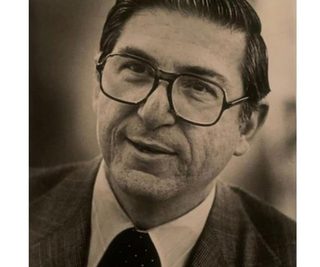
About Dr. James Likoudis
James Likoudis was an expert in Catholic apologetics. He is the author of several books dealing with Catholic-Eastern Orthodox relations, including “The Divine Primacy of the Bishop of Rome and Modern Eastern Orthodoxy: Letters to a Greek Orthodox on the Unity of the Church.” He has written many articles published by various religious papers and magazines.